Jujutsu Kaisen, One Piece, Naruto, and My Hero Academia, are all some of the most recognizable names in entertainment – regardless of whether you watch anime or not. There is no doubt that anime has grown to be one of the most influential sectors of entertainment in the US, and it is only predicted to grow with the American anime market’s 2025 value of roughly 2.6 million dollars predicted to grow by over 4 billion dollars by 2033 according to Research and Markets. What do all these series have in common? They are all shonen.
Shonen, or shonen manga, describes comics that primarily target a young male audience on which many anime adaptations are based. These stories typically feature action packed plots, the struggles and triumphs of friendship, and the never ending battle against the forces of evil. The story components of shonen are the same ones found in typical Western action shows and movies but something sets them apart: execution.
In an interview with senior Jordan Hart, current president of Wilcox’s Anime Club and two year long member, Jordan shares that it is the “on point” animation that highlights the emotional highs and lows of the typical action that attracts fans. Jordan also reaffirms that most of the popular anime among the students of the club are shonen, dropping names such as Death Note and Inuyasha. On the topic of shonen, he adds that just the sheer variety of stories and the cultural exchange aspect with seeing the unique “articulation” of these Japanese stories enhances their charm.
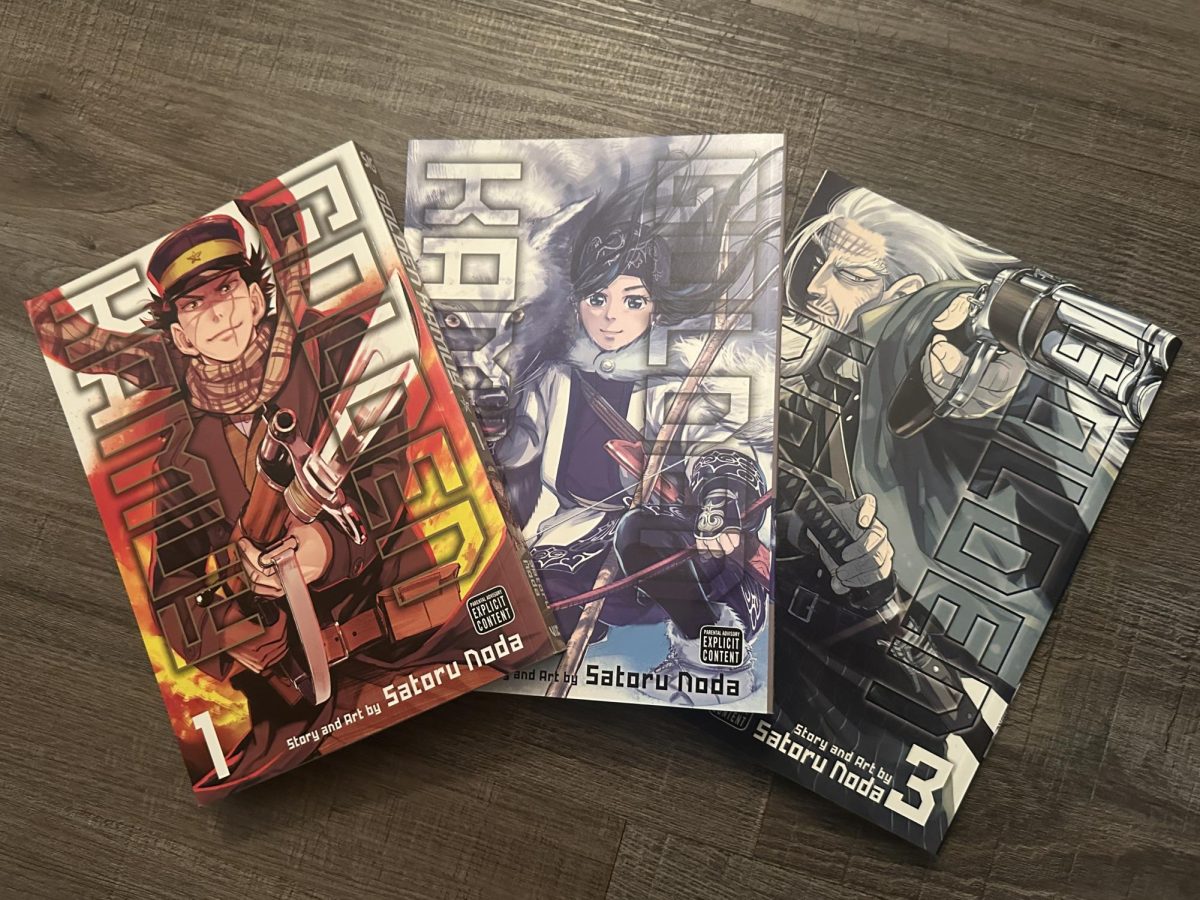
Where does Golden Kamuy come into all of this? Well, Golden Kamuy fits into all the requirements of a beloved shonen series, however, its adaptation is nowhere near the likes of previously named anime in Western popularity. And this is somehow in spite of the source material receiving plenty of award nominations and selling over 29 million manga copies according to the Japanese paper Mainichi Shimbun. So to bring this story justice, let me enlighten you about Golden Kamuy.
The show is a period piece taking place in the early 1900s that details the fight between competing factions to collect parts of an “unsolveable” map to stolen treasure, left behind by one infamous and faceless criminal. For the viewers, we follow main characters “Immortal” Saichi Sugimoto, a hardened veteran of the Russo-Japanese war, and Asirpa, a young girl from the Ainu indigenous people located in the Hokkaido region of Japan. Throughout their journey, our heroes travel across Hokkaido learning about the practices of the Ainu people and the Hokkaido nature they rely on. Of course, there are also tense battles with various foes – mainly the 7th division of the Imperial Japanese Army – that threaten their collection of parts of their treasure map. All of this is in the name of rightfully returning the gold to the Ainu people to aid in their fight for survival against the threats of colonization.
Not only is Golden Kamuy thrilling, emotional, and hilarious, but it’s also informational. The author, Satoru Noda, worked with real historians of Ainu language and culture along with those of military history at the time of the story. Noda also does not shy away from writing about the brutality of imperialism through the various soldier characters. Furthermore, he highlights its sins through truly humanizing the Ainu people who are subjected to many of the consequences of imperialism. Although Noda’s depiction of the Ainu is not perfect, having notably the “vanishing native” stereotype, it is good exposure for those who are curious about other cultures.
When closely examining Golden Kamuy, it is undoubtedly unworthy of its underrated status. A beautifully crafted narrative that finds a fascinating way to cover some of the hardest topics that affect modern human history, it is guaranteed to find an audience. The next time you need a show to binge or graphic novels to flip through, consider checking out Golden Kamuy!