On February 22nd, the JIATF-CC (U.S. Joint Interagency Task Force-Counter Cartel) aided in a raid with the Mexican military targeting the CJNG (Cártel de Jalisco Nueva Generación or Jalisco New Generation Cartel) in the state of Jalisco. The operation aimed to capture the cartel’s leader, Nemesio Oseguera – nicknamed “El Mencho.” During the raid, the Oseguera was injured by Mexican military forces and succumbed to his injuries in the town of Tapala, Mexico. The same day his body would be transported to Mexico City by National Guard troops.
According to Reuters, an anonymous government official reported that the U.S. offered a detailed layout for targeting Oseguera to the Mexican military but the execution of the raid itself had no U.S. involvement. Later on, it was revealed by Mexico’s Defense Secretary Ricardo Trevilla that Oseguera was tracked down through his girlfriend, who knew the location of his safehouse.
Following the news of their leader’s death, members of CJNG sought out revenge with nationwide violence. In as many as 20 of Mexico’s 32 states, members torched down businesses, vehicles, and created roadblocks. Since the bloodshed began, over 70 people have been killed. In attempts to quell the violence, the Mexican government has deployed over nine thousand troops since Oseguera’s death, as stated by Trevilla.
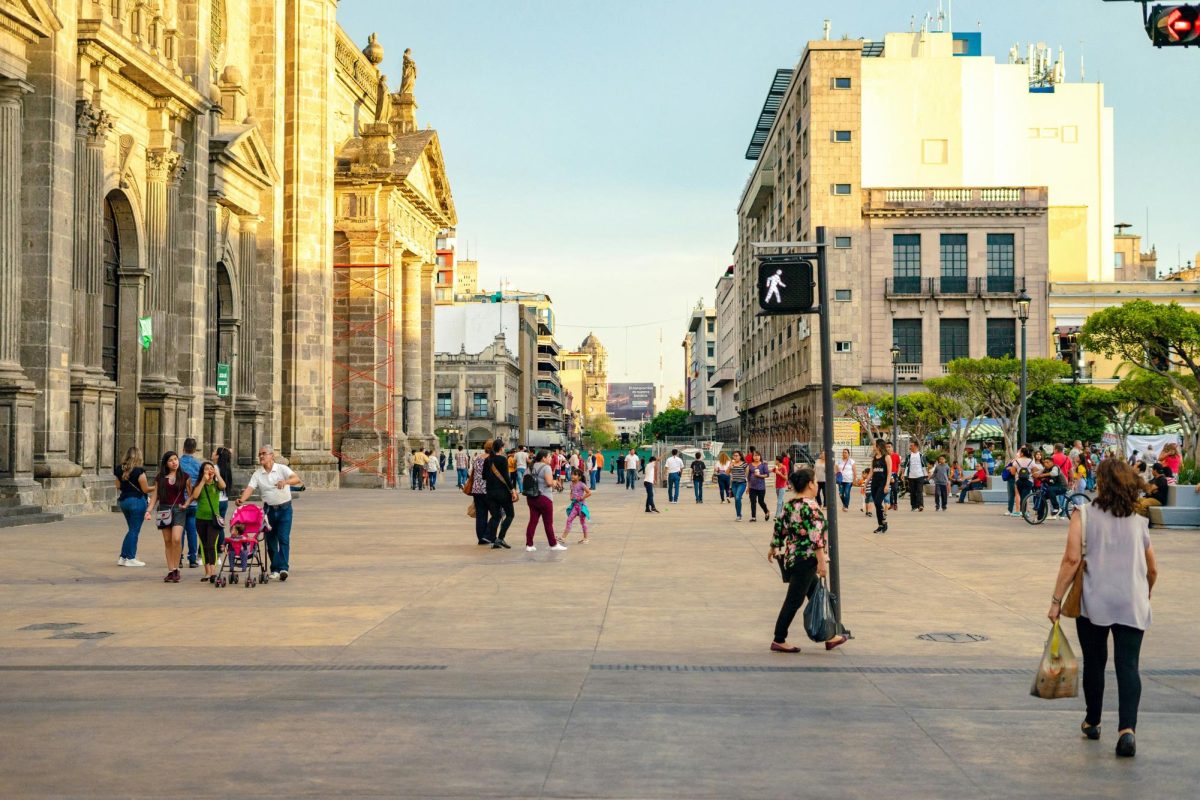
Garcia, a man living in Guadalajara, described the violence to The Times stating, “I could see people on fire.” He adds that the recent violence came as a shock as “they’d never messed with people like that before” and that the recent senseless attacks differed from the violence that “was always directed at the government.”
Analysts say that the violence may not be just limited to Mexico. Neighboring countries like Guatemala– where CJNG is known to operate– are at risk as well. According to the National Post, Adam Isacson, defence director at the Washington Office on Latin America, states that “One place to watch is northern Guatemala and Chiapas, where the CJNG appears to have mostly elbowed (the) Sinaloa (cartel) aside very violently lately.” Isacson points out that with Oseguera gone, the Sinaloa cartel could very well violently reseize the territory.
The CJNG have access to vast amounts of weaponry. According to the LA Times, their arsenal includes armored vehicles, rocket launchers, gatling guns, and land mines. Other notable weaponry includes firearms. For firearms, many are purchased in the U.S., due to minimal gun laws, and then smuggled across the border into Mexico as discovered by the ICIJ =(International Consortium of Investigative Journalists) earlier in February of this year.
JIATF-CC was officially established by the Department of War – formerly known as the Department of Defense – in January with the goal of mapping out cartel activity across the US-Mexico border. The newly launched operations come as no surprise with America’s continuous battle against drug related crime that has spanned across administrations. However, the war against drugs has recently been brought to attention with the Trump administration’s tough stance on the border.
From 2008 to 2023, the US has spent over 3 billion dollars in Mexico to counteract drug trafficking. Despite these efforts, the figures for drug overdose deaths have been on a steady increase during that time, with an increase of over 50 thousand drug overdose deaths between 2008 and 2023 as reported by the CDC. Trump’s administration has reacted to the insignificant progress by pressuring Mexican President Claudia Sheinbaum to bring an end to drug trafficking or face direct military intervention. Considering the recent US invasion of Venezuela and capture of leader Nicolas Maduro under charges that included drug trafficking, Mexico may as well be attempting to avoid a similar fate to Venezuela. Efforts to prevent intervention may prove difficult with the recent cartel violence.
Questions are raised as to what the future of Mexico will look like after the death of one of the most influential gang leaders. With the escalation of violence caused by Oseguera’s death, continuous funneling of weapons into Mexico, and the increasing severity of America’s drug crisis, it seems that the cartels will move to fill in the power vacuum left by Oseguera. The ensuing gang warfare that may follow would only push more to seek immigration in the US via any means, potentially worsening the current administration’s fears on illegal immigration and tensions between the Mexican and American government. Not only does Oseguera’s death mark an increase in gang violence in Mexico, it could trigger continued worsening relations between the American government and its own Latin American immigrant community.