As the nation celebrates its 250th anniversary this July, Americans are not only celebrating with Fourth of July fireworks and hot dog parties. As our nation reaches the quarter millennium mark, the people are commemorating this milestone with grander events that include military reenactments, fairs, and reflections on the country and its values.
At the national level, Congress established the U.S. Semiquincentennial (i.e., 250th anniversary) Commission in 2016 to honor the nation and the Declaration of Independence. The Commission, along with the nonpartisan organization America 250, has organized a variety of events concerning various aspects of our country, such as America Innovates and Our American Story, to recognize American technological innovation and the diversity of American experiences, respectively.
Notably, America 250 is organizing a nationwide “Block Party” the night before Independence Day, during which the Times Square Ball will drop when midnight strikes, making it the first time in its history it will drop down on a date besides New Years’ Eve. The U.S. Capitol Visitor Center has an ongoing exhibit about America’s 250th anniversary; aside from the nation’s founding, it covers the ways the country has celebrated its previous anniversaries and how that represents how Americans have seen their country over the years.
America 250 has even created a time capsule to be buried at Philadelphia’s Independence National Mall on Independence Day and not be opened for another 250 years. It has artifacts from all 50 states, D.C. and the American territories for future generations of Americans to eventually open. Some of these items include a handheld American flag, sports memorabilia, and artifacts from the three branches of the federal government.
President Donald Trump signed an executive order last year to create Task Force 250 to promote celebrations for the 250th anniversary. On their website, one can find the Task Force’s videos and timelines chronicling the American Revolution, while the connected group Freedom250 has collaborated with other organizations to create other national events. Freedom250 already created a visual, 360° projection of America’s history onto the Washington monument that began this past New Years’ Eve and lasted six nights. Freedom250 has planned the “Great American State Fair” to take place in the National Mall in late June and early July, and “Sail 4th,” in which ships and fleets from across the world are to sail into New York Harbor by the Statue of Liberty.
Aside from events organized by the federal government, cities and states—espeically those central to the American Revolution—are celebrating as well. In March, Bostonians commemorated the 250th anniversary of Evacuation Day, the day George Washington drove the British out of their siege of the city. “The values that Bostonians defended here,” Boston Mayor Michelle Wu said on the anniversary, “the right of the people to govern themselves, to speak freely […] these values demand the same kind of resolve summoned by those Bostonians 250 years ago.”
In Philadelphia, the Museum of the American Revolution in the city has set up an exhibit on the Declaration itself, highlighting the inspiration for the Founding Fathers’ revolutionary ideals and how it has influenced movements across the globe. The exhibit has 120 objects lent from all over the world, each of which helps tell the story of the nation’s founding document.
Wilcox Social Studies teacher Mr. Stott argues that the Declaration is singularly important in American history: the ideals of “‘the pursuit of happiness’ and ‘all men are created equal’ have inspired people in America and in other countries, almost like our mission treatment. We were formed as an ideal, which doesn’t apply to other nations.” While Mr. Stott acknowledges that the Declaration fell short in ideals, as many of the Founders—including Thomas Jefferson, the Declaration’s principal author—owned slaves and did not believe African Americans and women deserved equal rights, he argues that “every advancement in our history has come from [the Declaration’s] lines—whether it be suffrage, civil rights or anti-slavery.” Americans, he argues, have re-interpreted Jefferson’s ideals whenever the nation faces new challenges in attaining the Declaration’s principles.
Philadelphia will also hold 250th anniversary celebrations for the FIFA World Cup games that will be played there in the summer. The most important one is their Fan Festival, which will be open for 39 days so that visitors and sports fans can watch the games. The last game Philadelphia will host in this World Cup falls on July 4th, making it very important in the eyes of the city’s host committee.
Though these events are important, they are not free of controversy. In particular, Freedom250 has faced criticism from Democrats for not being transparent, criticizing the group for providing certain offers to its donors. The New York Times reported that organizations that donated more than $1 million were invited to “a private Freedom 250 thank you reception hosted by President Donald J. Trump.” Despite the controversy, this is not necessarily illegal: Scott Greytak, head of Transparency International U.S., tells USA Today that it is normal “for high-dollar donors to get invited to receptions,” mentioning, for example, that “if they get a logo replacement, invited to an event, that is not illegal.”
While many are celebrating the anniversary by holding grand festivities, many others are reflecting on the meaning of America itself. Wilcox student Hajrah Jilani believes that America is “basically made up of different countries, like a melting pot” of different cultures, and that this gives our country its strength. “America is one big group, but many different groups” at the same time, Jilani—being a daughter of immigrants—notes. When asked what the best part of America is, Jilani replies that it is our constitutional freedoms, as “those are the bigger aspects that we as Americans value. And that really sets us apart from other countries.”
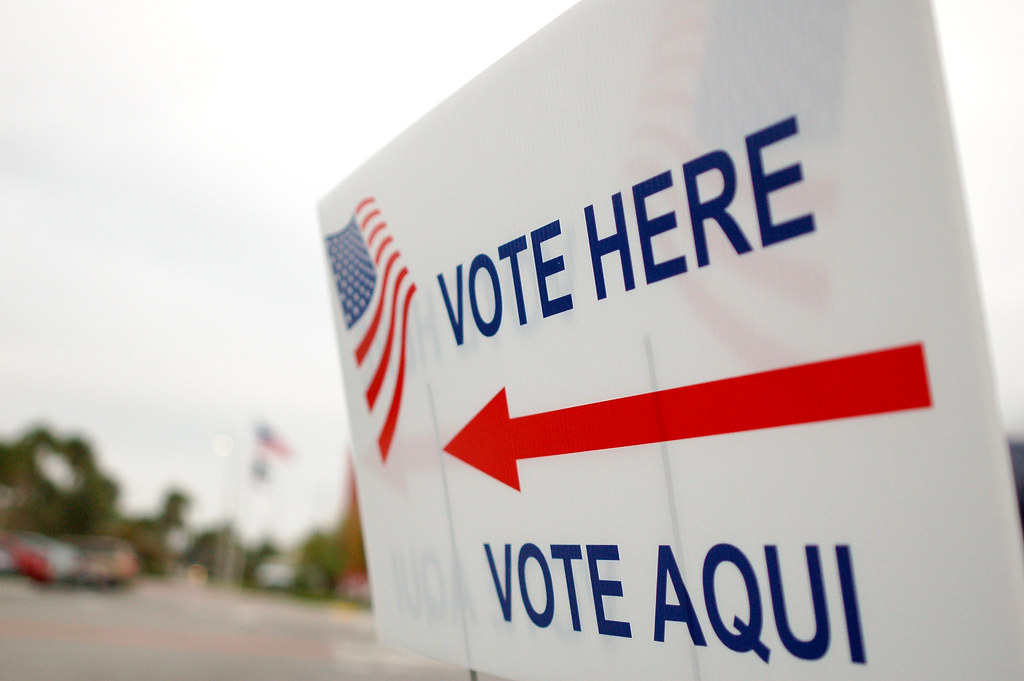
The weekly news magazine 60 Minutes has begun getting celebrities to reflect on America’s 250th anniversary in its “Last Minute” segment, hosting people from evangelist Franklin Graham to poet Amanda Gorman. In a February “Last Minute” segment, documentarian Ken Burns says he believes that the Founding Fathers would be “surprised—pleasantly so—that we are still here, 250 years later.” Further reflecting on the state of the nation today, two and a half centuries after the Declaration, Burns states that the Founders “would be disappointed, not because of how divided we are […] but how we are increasingly struggling to acknowledge our shared values.” He believes the best way to pay respects to our nation in the year of its 250th anniversary “is to study our history, in all its complexities, and to vote.”