Hundreds of candles flicker in the darkness of April 26th, 2026, in the town of Slavutych just on the outskirts of Pripyat, the home to Chernobyl. Veterans and Ukrainian officials gather around in a collective, mournful silence. This was the 40th anniversary of the world’s worst nuclear disaster. Names of the firefighters and workers who rushed into the site of the tragedy in 1986 were read aloud, memorializing their significance in this event. Commemorations for the 40th anniversary took place in a town called Slavutych, with a solemn wreath-laying ceremony in Ukraine’s capital, Kyiv, led by President Volodymyr Zelenskyy. These events had to be held under the constraints of the ongoing war, but that didn’t stop participants from gathering around in white hazmat suits to lay flowers while international leaders engaged in the ceremonies in Kyiv, recalling the events of Chernobyl.
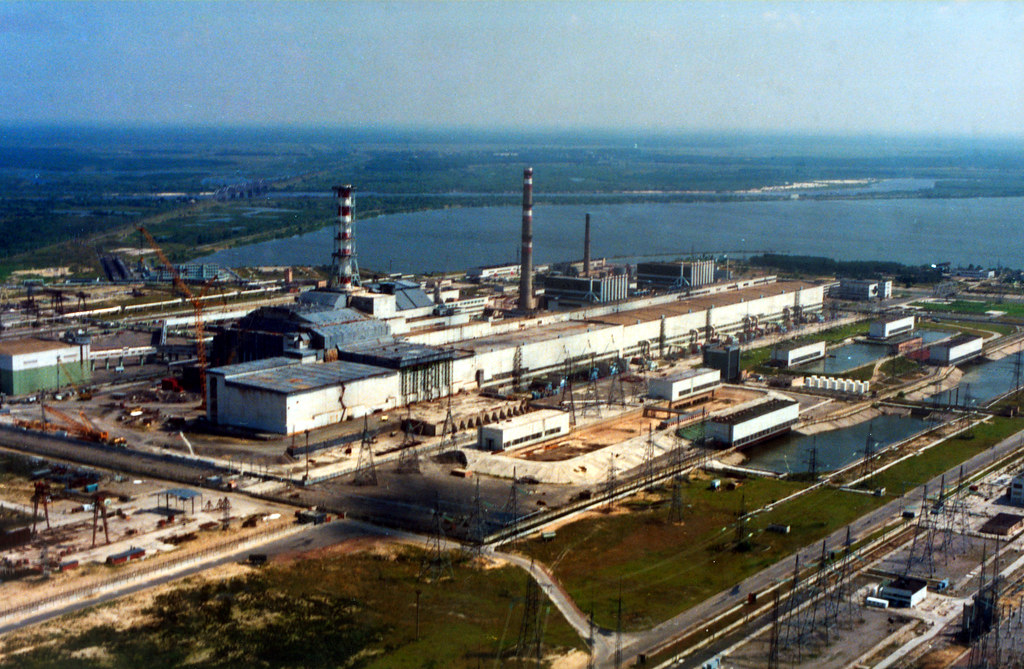
The catastrophe occurred exactly four decades ago during a flawed safety test in Reactor Number 4, resulting in an explosion 400 times more radioactive than the atom bomb. 100,000 people were forced out of a 1,000 square mile exclusion zone surrounding the area. For years, this region nicknamed the “dead zone” remained as a monument to the Soviet-era. However, the site’s status as a historical landmark ended in 2022 when Russian forces began to occupy the plant. On February 24th, 2022, Russian forces seized the entire area of the Chernobyl Power Plant, looting thousands of pieces of stolen equipment including specialized radiological laboratory gear, several hundreds of vehicles, and the servers for their radiation monitoring system. All these stolen supplies resulted in an estimated 100 million euros in damage, causing a major setback to the area’s journey to recovery.
Chernobyl remains an extremely significant point in modern history. Beyond the tragedy, the disaster acted as an influence for the collapse of the Soviet Union. The event reshaped global nuclear policies, causing the International Atomic Energy Agency’s (IAEA) to create much more strict safety protocols regarding nuclear management. The IAEA strengthened its Operational Safety Reviews Team, of which would provide peer reviews of nuclear power plants worldwide. Not only that, but the IAEA also utilized the Convention on Early Notification of a Nuclear Accident, an international treaty that requires countries to provide immediate notification regarding any nuclear accident that has, or possibly could have, significant consequences.
Over the last 40 years, the Exclusion Zone has undergone a considerable transformation from the recognizable wasteland to a wildlife sanctuary. Without human interference wolves, lynx, and several other rare species of animals took home in the ghost city of Pripyat, ironically bringing back life to the abandoned settlement. Nature has gone through what some people might call a “factory reset” in the environment, with plantations growing through pavement and floorboards. In addition to plants regrowing, animals like wolves have estimated to have their population be seven times higher than the surrounding uncontaminated area. Not only that, but animals like brown bears and European bison, which hadn’t been seen in the region for over a century before the accident, have returned and began to establish populations.
The site has served its purpose in generating nuclear power and now continues to teach the world the absolute necessity of maintaining nuclear security during times of geopolitical upheaval. Despite the hardships the plant has and still are facing, that doesn’t neglect its significance in revolutioning global safety. The disaster proved that High-Power Channel-type Reactors lacked essential containment structures in the west, leading to global bans on similar designs that could’ve possibly been disastrous for many. In addition, several countries chose to participate in the global anti-nuclear movement, halting several nuclear energy programs across the globe. Chernobyl continues to serve as a living laboratory for studying the effects of radiation in biology and genetics, helping scientists understand radiation affects subsequent generations. Now this teaching doesn’t come without the cost of those who passed during the event and subsequent radiation, individuals such as Valery Khodemchuk, the pump operator who was the first casualty of the disaster. Other workers who perished during the tragedy includes firefighters Vasily Ignatenko and Volodymyr Pravyk, who died from acute radiation sickness while directing the initial efforts to extinguish fires following the event. Even after the catastrophe, scientist Legasov succumbed to radiation while managing to identify the critical design flaws that caused the disaster as a whole. The candles in Slavutych continue to flicker, commemorating these individuals and several thousand more, shedding light onto the most significant nuclear disaster in history.