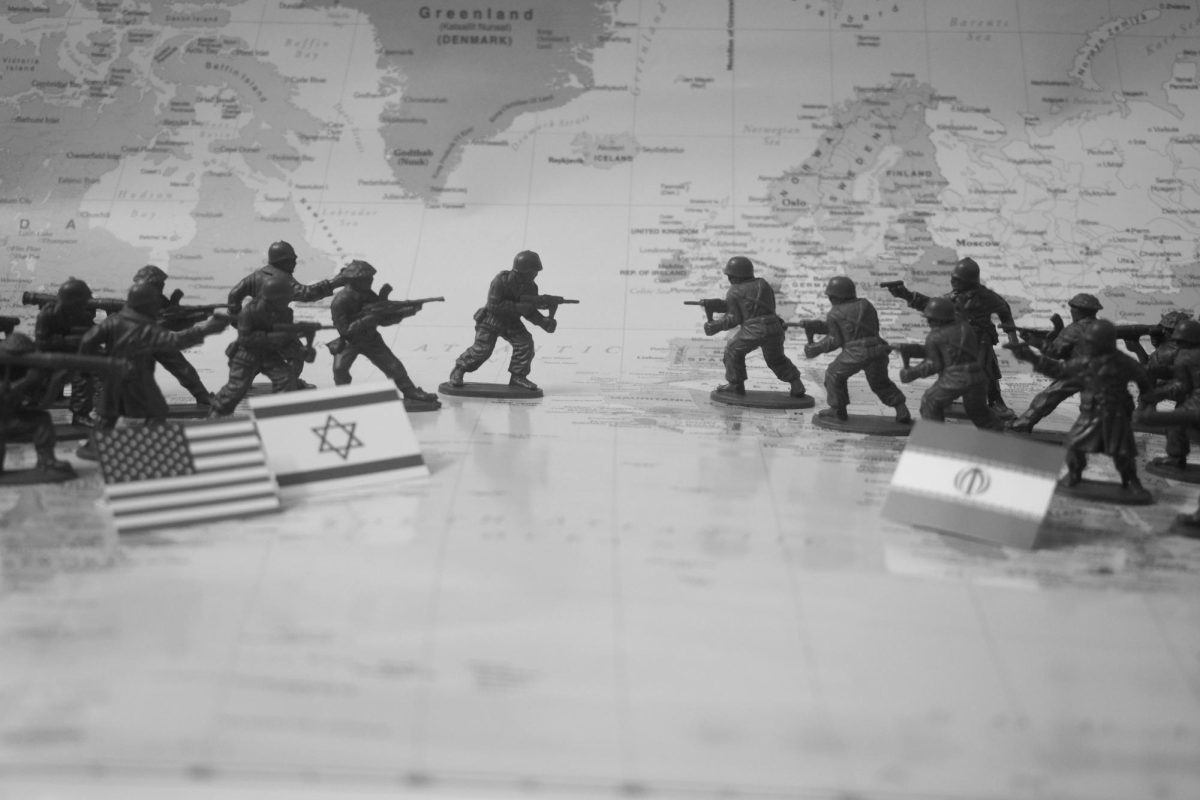
On February the 28th, the U.S. launched a joint military attack with Israel against Iran. As stated by President Donald Trump, Operation “Epic Fury” was aimed at preventing Iran from developing nuclear weapons. The endeavor was preceded by weeks of rising tensions between the two nations over disagreements on Iran’s military program and accusations of Iran amassing nuclear weapons.
Before the launch of the operation, Iran and the U.S. had multiple rounds of indirect talks. Just days before the attack, Oman’s Foreign Affairs Minister, Badr bin Hamad Al Busaidi, reported that peace was “within reach” between Iran and the U.S. following a Geneva conference. However, both parties were unsatisfied with deliberations. Iran claimed the IAEA (International Atomic Energy Agency) of being politically biased and making unfair claims that Iran had enough nuclear stockpile for developing weapons. Meanwhile, Trump expressed hostility towards Iran’s administration citing violence in recent protests over targeted internet outages in the country as reason.
Previously in June 2025, the U.S. already targeted two uranium enrichment facilities in Operation “Midnight Hammer”. Following the strikes, Secretary of War, Pete Hegseth reported that the operation had been an “overwhelming success” Despite the previous hindrance of Iran’s nuclear program and attempts at peace, the U.S. and Iran were pushed into war.
The start of the US-Israeli-Iranian war could be credited to early talks between Israeli Prime Minister, Benjamin Netanyahu. According to Reuters, less than 48 hours before the launch of Operation “Epic Fury” that Netanyahu and Trump had spoken and confirmed to carry out the operation as Iran’s supreme leader, Ayatollah Ali Khamenei, would be in Tehran at the time and a successful mission would incite a regime change. Netanyahu also urged the U.S. to get directly involved. Claims of Israeli involvement are further conceded by Joe Kent, former director of the National Counterterrorism Center. In his resignation letter which was posted to X, Kent cites U.S. involvement in Iran for his departure, stating he “cannot in good conscience support the ongoing war in Iran” and that “Iran posed no imminent threat to our nation, and it is clear that we started this war due to pressure from Israel and its powerful American lobby.” In a later press conference, Netanyahu denies having dragged the U.S. into the conflict.
During the February 28th attacks, the U.S. successfully assassinated Iran’s supreme leader, Ali Kahmennei, starting the process of a regime change with the former leader’s son, Mojtaba Khamenei, replacing him. Concerns have been raised over the new Ayatollah as analysts suggest Mojtaba is considerably more radical than his aging father. In an interview with the New York Times, Tehran analyst Mehdi Rahmati stated, “Mojtaba is the wisest pick right now because he is intimately familiar with running and coordinating security and military apparatuses” Despite one of the U.S.’ primary goals being a change in leadership, the war is still ongoing.
However, hopes of peace have been raised with Trump’s April 1st address on the war claiming that the war is in its final stages with Iran military “essentially decimated” According to Time’s analysis of the Pentagon’s reports, Operation “Epic Fury” has injured 90% Iranian’s missile capacity and 70% of its launchers have been neutralized.
Since the start of the war, in just over a month, U.S. forces have struck more than twelve thousand targets within Iran with the goal of “[bringing Iran] back to the Stone Ages, where they belong,” as stated by Trump. In response, Iran has also sent out retaliatory strikes on neighboring nations such as the UAE and Israel. In fact, the U.S.’s threats have seemed to further escalate Iran’s military fervor with military spokesman Ebrahim Zolfaqari stating that the war will continue until “permanent regret” and the surrender of its opponents.
Moreover, with Trump’s agreement of a 2 week ceasefire on April 7th, Trump is set to end the war on Iran’s terms in a 10-point agreement. In a Truth Social post, Trump stated “almost all” of the points had reached mutual agreement and that the two-week ceasefire would allow the plan to be “finalised and consummated” The agreement notably includes full compensation to Iran for damages, the allowance of a continuation of Iran’s nuclear enrichment program, lifting of sanctions on Iran, and U.S. commitment to non-aggression, as reported by Al Jazeera.
Although the effects of the Iranian conflict can be felt at home in the U.S. with rising gas and food prices due to the restrictions on the critical trade waterway, the Strait of Hormuz, Iranians are feeling the real consequences of the war. The attack at the beginning of the war notably hit a young girl’s school in southern Iran, killing 170 – most of this number being children. Two U.S. officials reported to Reuters that they believe the U.S. was responsible for the strike, however, both the U.S. and Israel have denied responsibility for the deaths.
Prior to the war, Iran was suffering an economic crisis with rises in food prices as high as 60% in the previous year. The war has exponentially worsened the conditions for Iranians. In an interview with the BBC, one Iranian woman going by the alias “Setareh” states “We cannot afford even basic food. What’s in our pockets does not match market prices… Iran has also been under sanctions for years” One nurse going by “Tina” in Tehran, one city that has been a major target of Israeli-U.S. strikes, provides a picture of the bloodshed, states that she saw bodies arriving for treatment “that were not recognisable… some had no hands, some had no legs”
The U.S.’s previous track record of intervention with Iran has been less than spectacular. Thus far the U.S. has had ties to instigating the overthrow of democratically elected Iranian prime minister Mohammad Mosaddegh, funding the oppressive regime of Iran’s final monarch, and imposing sanctions that are still devastating the everyday citizens in Iran.
Throughout the recent war the U.S. has claimed to be acting with the idea of liberating the Iranian people, with the goal of inciting a regime change. Thus far, the U.S. has shown that it has an inability to ameliorate the situation as the new Ayatollah has been shown to be more strongheaded and radical. The U.S. claim to the right of deciding the fate of a foreign nation’s unsatisfied population raises ethical concerns. Considering the U.S. and its issues with its population, the logic given for the Iranian conflict reflects a double standard as the same logic could be used to attack them. Furthermore, U.S. interests have been undermined with the 10-point agreement as Iran is set to both continue its nuclear program and retain full control over the Strait of Hormuz. As the next step of negotiations are planned to take place under Pakistani mediation in its capital Islamabad, time will tell if the war was truly justified or not.